


Microsoft’s FY27 incentive updates represent one of the most significant shifts in channel profitability in recent years. The direction of travel is clear: Microsoft wants partners focussed on upselling strategic workloads, driving customer growth, and accelerating AI adoption rather than simply renewing existing subscriptions.
For many resellers, the removal of core incentives across Microsoft 365 and Dynamics 365 means traditional renewal-led revenue streams will generate significantly less incentive income. However, partners that successfully build upsell motions around strategic products can still achieve strong profitability through enhanced growth accelerators and strategic workload incentives.
Key changes what they mean for your business.
Microsoft have reduced the incentives for resellers who are maintaining existing Microsoft 365 and Dynamics business however they have increased the growth incentives. Azure core incentives are the same with an introduction of Tier 2 and 3 workloads for additional growth accelerators.
Within this blog we will talk about…
- Executive Summary of FY27 Incentive Changes per solution area
- The Bigger Picture: What Microsoft Is Trying to Achieve
- What Does This Mean in Practice?
- How Resellers Can Replace Lost Incentive Revenue with Infinigate
- Final Thoughts
Executive Summary of FY27 Incentive Changes per solution area
Microsoft 365
Key Changes
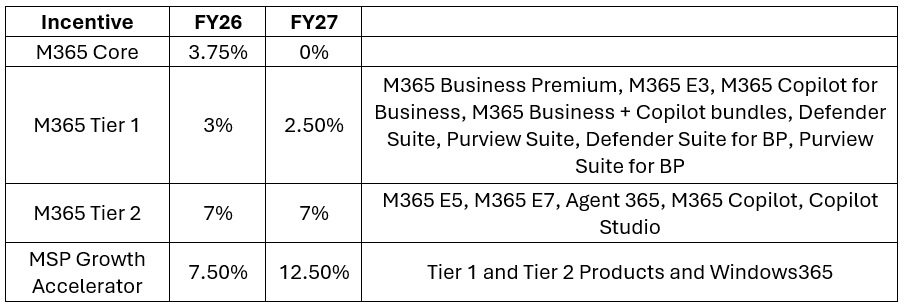
Growth Accelerator only applies to products included within Tier 1 and Tier 2 strategic categories and only applies to the incremental increase in revenue.
Dynamics 365
Key Changes
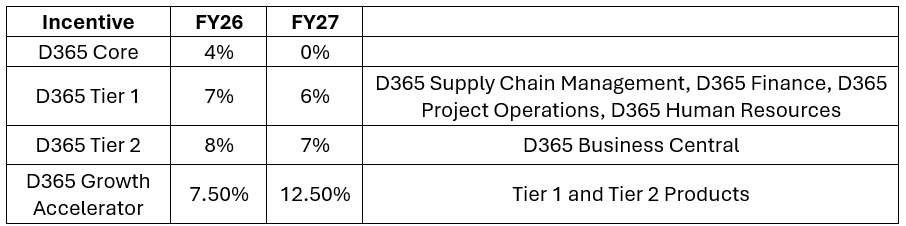
Growth Accelerator only applies to products included within Tier 1 and Tier 2 strategic categories and only applies to the incremental increase in revenue.
Azure
Key Changes
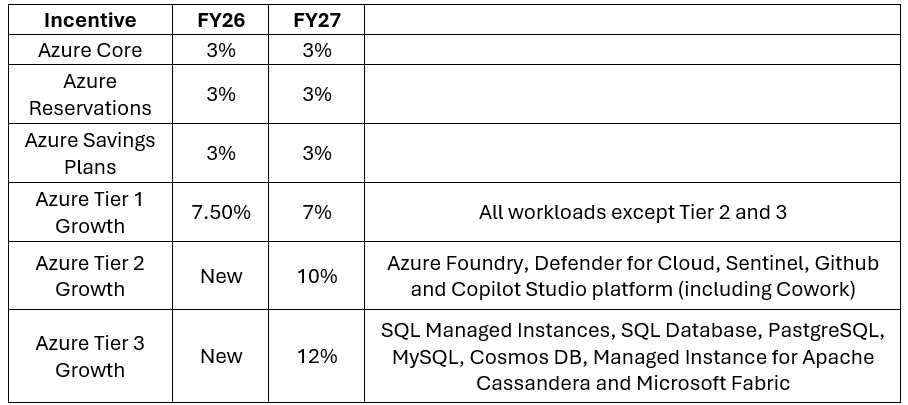
Azure remains the most stable incentive area, with Microsoft introducing additional reward opportunities for strategic workloads while maintaining the existing core rates.
Growth Margins
Starting October 2026, there will be the following added. More details are to follow.
Microsoft’s growth margin model is designed to reward partners that drive customer growth rather than simply maintain existing licence estates. As shown in the qualifying scenarios overview, there are three ways to qualify:
- New-to-Offer, where a product is genuinely new to the customer tenant
- Seat Expansion, where customer adoption increases significantly on an existing product
- Strategic SKU Mix, where the ratio of strategic workloads increases against the customer’s base licensing estate.
The Bigger Picture: What Microsoft Is Trying to Achieve
The message behind these changes is straightforward.
Microsoft is shifting incentive spend away from rewarding installed base revenue and towards driving strategic workload adoption.
Historically, partners received incentive payments simply for maintaining customers on common workloads such as Microsoft 365 Business Premium or Dynamics licensing. Moving forward, that model is largely disappearing.
Instead, Microsoft is rewarding partners that:
- Upsell customers into higher-value workloads.
- Drive AI adoption.
- Expand strategic Microsoft technologies.
- Deliver measurable customer growth.
For many resellers, this means customer success, adoption services, and value-added consulting become far more important than simply transacting licences. Microsoft have made further investments in programs to help partners who invest in Microsoft get the most out of it. All new program changes can be found here: https://incentiveguide.partner.microsoft.com/en-US/whats-new
These new funding pots are unlocked through partner solution designations or specialisations. We at Infinigate can help you navigate these programs to maximize the investment from Microsoft for your customers.
What Does This Mean in Practice?
Scenario 1: Existing Business Premium Customer
Under FY26:
A customer with Microsoft 365 Business Premium generated:
- 3.75% Core
- 3% Tier 1
Total incentive = 6.75%
Under FY27:
- Core incentive removed
- Tier 1 reduced to 2.5%
Total incentive = 2.5%
Partners will see a significant reduction in earnings from existing Business Premium estates if no additional workloads are sold. Simply renewing licences is no longer enough to drive meaningful incentive revenue.
Scenario 2: Existing Business Standard Customer
A customer with Microsoft 365 Business Standard generated:
- 3.75% Core
Total incentive = 3.75%
Under FY27:
- Core incentive removed
Total incentive = 0%
Scenario 3: Upselling Business Premium
Under FY26:
A successful Business Premium upsell generated:
- Tier incentive
- Growth Accelerator
Total value = 14.25%
Under FY27:
- Tier incentive remains
- Growth Accelerator increases to 12.5%
Total value = 15%
Impact: Microsoft is actively rewarding partners who grow customers rather than maintain them. Incentive potential actually increases for partners that build effective customer expansion programmes.
Scenario 4: Azure Growth Opportunities
Under FY26:
A customer buys a new Azure Fabric SKU
- 3% Core
- 7.5% Growth
Total incentive = 10.5%
Under FY27:
A customer with buys a new Azure Fabric SKU
- 3% Core
- 12% Growth
Total incentive = 15%
For partners delivering Azure migration, optimisation, AI workloads, data platforms, and other strategic services, there is still significant opportunity to earn meaningful incentive revenue.
Scenario 5: Partner-to-Partner Customer Change of Channel
A customer moves from one reseller to another.
What happens? (date to be confirmed)
Under FY27:
- No Strategic Incentive for 12 months
- No Core Incentive
- Growth incentives only
This means customer acquisition through transfers becomes less lucrative than organic growth within an existing customer base. Partners will need to focus on demonstrating additional value beyond simply winning a customer away from a competitor.
Scenario 6: Distributor Change
A reseller moves from one distributor to another.
What happens? (date to be confirmed)
Under FY27:
- No Core Incentive
- No Strategic Incentive for 12 months
- Growth incentives only
A change of distributor is treated as a Change of Channel Partner (COCP) for the moved business — core and strategic accelerators are unavailable for 12 months, and only the growth accelerator applies. Genuinely net-new business (a new customer or workload with no incumbent partner) is not COCP and remains fully eligible.
Changing distributors does not create a new immediate margin opportunity. It does however create a business decision, “Is my distributor going to help me grow or remain still?”.
The commercial focus must remain on net customer growth and strategic workload expansion.
How Resellers Can Replace Lost Incentive Revenue with Infinigate
The reality is simple: if your business relies heavily on renewal incentives, FY27 will reduce your profitability.
To offset this, resellers should focus on three key areas.
1. Create More Upsell Opportunities
The easiest way to unlock incentive potential is through strategic workload sales.
Examples include:
- Microsoft 365 E7
- Agent 365
- Security and Compliance workloads
- AI and Copilot solutions
- Dynamics 365 expansions
- Strategic Azure services
Growth remains Microsoft’s primary investment area.
2. Sell Value-Added Services
The partners that thrive in FY27 will be those that attach services to every customer conversation.
Services help:
- Improve customer outcomes
- Increase strategic workload adoption
- Drive higher growth rates
- Create additional revenue streams outside incentives
Examples include:
- Security assessments
- Copilot readiness engagements
- Adoption and change management programmes
- Managed services
- Consultancy and architecture services
3. Leverage Specialist Vendors/Services
Programmes designed to generate customer expansion and adoption become increasingly important.
This includes solutions and services that help identify upsell opportunities and accelerate consumption, such as:
- Infinigate SCOUT – for upsell, increased managed services and PS plus FinOpps services
- Infinigate Professional Services
- 3rd-party complimentary products
- Customer Success engagements
- Microsoft-funded programmes
- Adoption and optimisation workshops
Final Thoughts
FY27 marks a major evolution in Microsoft’s channel strategy. The removal of Microsoft 365 and Dynamics 365 core incentives means partners can no longer rely on installed base revenues to generate meaningful returns.
The winners will be partners who embrace customer growth, strategic workloads, AI adoption, and value-added services.
While some traditional revenue streams will become less profitable, the increased Growth Accelerator rates and new Azure strategic growth incentives create significant upside for partners willing to evolve their go-to-market strategy.
The message from Microsoft is clear: growth, not maintenance, is where the incentive opportunity lies.
Infinigate Cloud is here to help you grow and navigate these changes. Our stats tell the story, fastest SMB security upsell in the UK&I, Support that stands by you in times of need with a Net promoter score of 97 with the Microsoft support designation and a professional services team ready to deliver where you can’t.
We are a value-added distributor with the services already available to help you become more profitable in this new Microsoft landscape.
If you require any further information, please reach out to our Microsoft Specialist team on microsoft@infinigate.cloud